

Dealing with a malfunctioning gas furnace can be a real downer, but fear not! Every problem has a reason and, more importantly, a solution. In this article, we’re diving into troubleshooting gas furnace issues to get your system back on track and keep your home comfortable. Let’s get into it!
A Troubleshooting Guide For Your Gas Furnace
1. Check The Fan
When troubleshooting gas furnace issues, a great starting point is checking the proper functioning of its crucial component, the fan.
The thermostat is the control center for your heating system, so head over to the thermostat and ensure the power is turned on by turning the fan to the ON position on your thermostat. If something is still off, check to see if the circuit breakers on the electrical panel have been tripped to the OFF position. Additionally, verify that the SSU (Service Switching Unit) light switch on the gray box near the furnace is also set to ON to supply power to your furnace.
2. Check The Settings
If your gas furnace is not delivering the expected heat, the issue could be as simple as forgetting to set your thermostat in the HEAT position. So, what you can do is simply double-check that the settings are in the correct position. Also, while you’re at it, see if your thermostat’s temperature setting is higher than your indoor temperature. If the setting is too low, the furnace may not activate.

3. Check The Air Filter (A Key Step in Troubleshooting Gas Furnace Issues)
The next step in troubleshooting your gas furnace is to check the air filter. This is a common culprit behind many heating issues. A clean air filter is vital for optimal furnace operation, as a dirty or clogged filter can impede airflow, reducing effectiveness or even causing your gas furnace to shut down. If your air filter is dirty, it’s essential to clean or replace it.
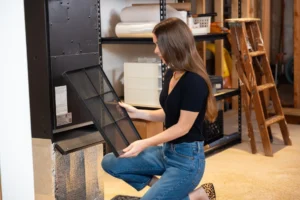
You’d also want to ensure the air registers (supply or return ducts) around the house are plugged in. Like air filters, if these air registers are blocked, it can disrupt airflow, make your furnace work harder, and potentially lead to overheating issues.
If you need more clarification about the condition of your air filter and air registers, it’s advisable to have a professional inspect them for you.
4. Inspect the Pilot Light or Ignition System
When troubleshooting gas furnace issues, don’t overlook the ignition source. Older furnaces often rely on a pilot light, while newer models use electronic ignition systems. If your furnace isn’t starting, check whether the pilot light is lit. If it’s out, follow the manufacturer’s instructions to relight it safely.
For electronic ignition systems, listen for clicking sounds or look for error codes on the control panel. A faulty igniter or sensor could be the culprit. If you’re unsure how to proceed, it’s best to call a professional to avoid damaging sensitive components.
End Note
Given our dependence on HVAC for a comfortable home, having a grasp of troubleshooting gas furnace issues becomes essential knowledge. Once you understand the process, it is no longer a daunting task. Unless, of course, you encounter a more significant issue, which will require professional assistance.
However, if you want to minimize problems from occurring in the first place, regular maintenance is the way to go. This is key to maintaining the efficient operation of your furnace. Moreover, if you find yourself uncertain about the necessary steps or lack the time for routine checks, seeking help from professionals is a wise decision. Contact us at Johnson’s Heating. We possess the expertise needed to maintain your gas furnace and more!
Recent Comments